
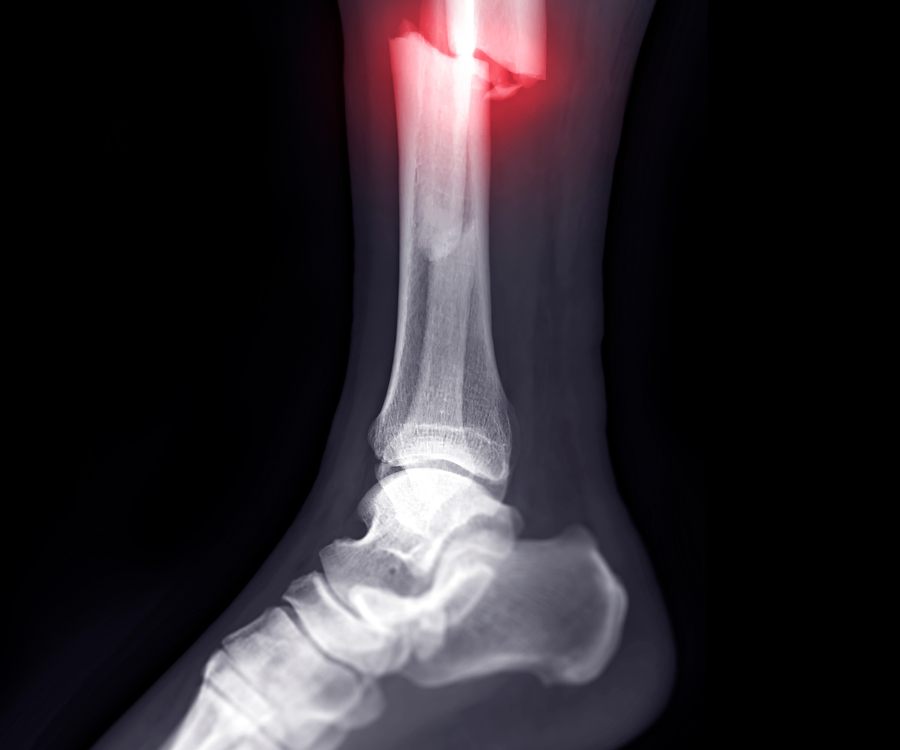
Beyond the Snap: What a Broken Bone Actually Looks Like on an X-Ray
We’ve all seen it in the movies: a character takes a hard fall, gets an X-ray, and the doctor immediately points to a massive, unmistakable gap right through the middle of a bone.
In real life, spotting a fracture isn’t always that theatrical. While some bone breaks are completely obvious, others are incredibly subtle—requiring a trained eye to notice a tiny disruption in the bone’s outer texture or a faint, dark line where it shouldn’t be.
If you are looking at your own medical scans or just curious about how radiology works, here is a practical guide on the key signs doctors use to spot a broken bone on an X-ray.
1. The Basics: How Bones Look When Healthy
Before looking for a break, it helps to understand what “normal” looks like.
X-rays work by passing radiation through your body. Dense materials like bone block the radiation, making them appear bright white on the final image. Softer tissues like muscle, fat, and air allow the radiation to pass right through, showing up in shades of gray or solid black.
On a healthy X-ray, a bone should have a smooth, continuous, solid white outer border (called the cortex) and a slightly less dense, gray-white center (the medulla). Any disruption to this pattern is a major red flag.
2. Visual Signs of a Fracture on an X-Ray
When radiologists evaluate a scan for injury, they are essentially playing a medical version of “spot the difference.” They look for several classic indicators:
A Sharp, Dark Line (The Radiolucent Line)
Because a fracture creates a physical gap in the bone, that gap fills with air, blood, or soft tissue—all of which are less dense than bone. On the X-ray, this looks like a sharp, dark line cutting through the bright white structure. This is the most common sign of a standard fracture.
A Disrupted Outer Edge (Cortical Step-Off)
The outer shell of your bone should be perfectly smooth. If a bone is broken and the pieces shift even slightly, that smooth line will look interrupted. Doctors call this a “cortical step-off” because the bone’s edge suddenly drops or steps like a staircase.
Buckling or Bulging
Not all bones snap cleanly. In children, whose bones are softer and more flexible, a injury might cause the bone to bend or bulge on one side rather than breaking all the way through. This is known as a buckle fracture (or torus fracture) and looks like a tiny, smooth bump on the edge of the bone.
Overlapping White Areas
Sometimes, instead of pulling apart, the two broken ends of a bone are driven into each other by the force of the impact (an impacted fracture). On an X-ray, this causes the two pieces to overlap. Because you are looking through double the amount of bone, the area where they meet will actually look brighter white than the rest of the bone.
3. The Different Ways Bones Break
Fractures are categorized based on how the break looks and the direction it takes. Here are a few common types you might see on an X-ray report:
| Fracture Type | What it Looks Like on the X-Ray |
| Transverse | A straight horizontal line directly across the bone. |
| Oblique | A diagonal or angled line slicing through the bone. |
| Spiral | A twisted, curved line that wraps around the bone shaft, usually caused by a twisting injury. |
| Comminuted | The bone has splintered or shattered into three or more distinct pieces. |
| Greenstick | An incomplete break where one side of the bone is broken and the other side is merely bent (common in kids). |
4. Why Doctors Take Multiple Views
Have you ever wondered why the X-ray technician makes you adjust your arm or leg into awkward positions for three different pictures?
It’s because X-rays are flat, 2D images of 3D objects.
A fracture line might be completely invisible from the front because the front and back pieces of the bone hide the gap. However, when the technician rotates your limb 90 degrees to get a side profile (a lateral view), the break suddenly pops out clearly. Doctors almost always require at least two or three different angles to confidently declare a bone broken or cleared.
Summary: When to Seek Help
If you or a loved one experienced a hard fall or impact, look out for physical symptoms like immediate swelling, bruising, deformity, or an inability to bear weight. Even if you think it’s just a bad sprain, getting a professional X-ray is the only foolproof way to ensure the bone heals in the correct alignment.
Disclaimer: This article is for informational purposes only and should not be used as a substitute for professional medical advice, diagnosis, or treatment. Always consult a qualified healthcare provider if you suspect a fracture.
No comment