
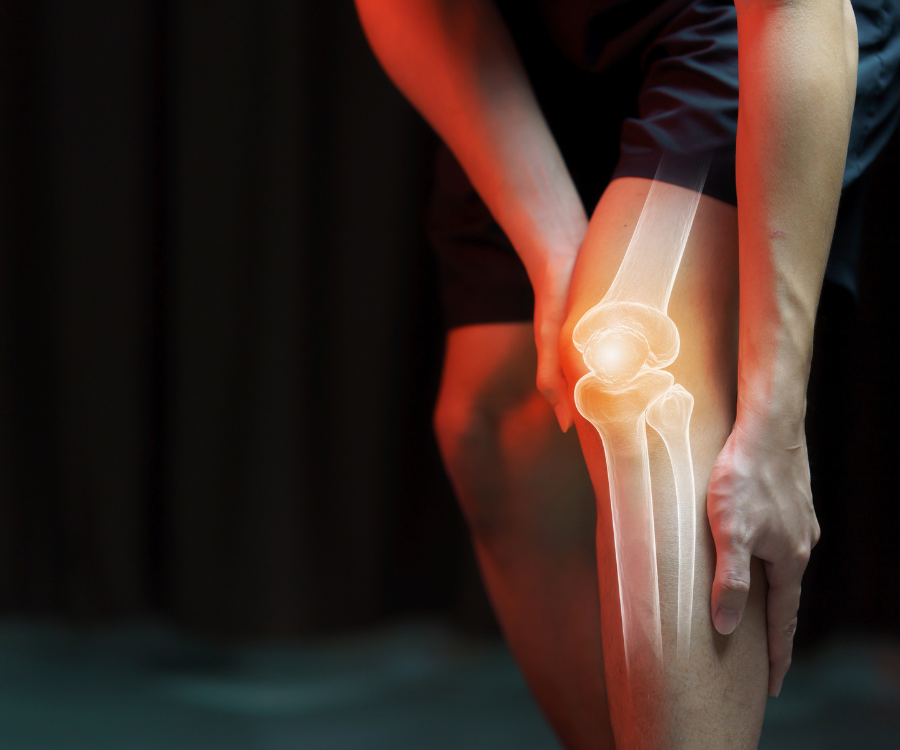
The Hidden Wear and Tear: Joint Damage You Can’t Feel
We all have those mornings where we wake up a little stiff. We usually brush it off, blaming it on a tough workout, sleeping at a strange angle, or simply “getting older.” For a while, those explanations hold up. But what if that minor, painless stiffness is actually your body’s earliest warning sign of asymptomatic joint damage?
The truth is, your joint health can decline dramatically without ever sounding the alarm with severe pain. This phenomenon, often referred to by orthopedists as silent osteoarthritis, means that the protective structures in your joints are wearing away long before you feel the classic ache of arthritis.
Why Don’t We Feel the Damage Happening?
To understand how joint damage can be silent, you have to look at how our joints are built. The ends of our bones are capped with cartilage—a smooth, shiny, shock-absorbing tissue that allows the bones to glide past each other without friction.
Here is the catch: cartilage does not have its own nerve endings.
Because of this lack of nerves, your cartilage can thin, fray, and deteriorate significantly without sending a single pain signal to your brain. In fact, research shows that a surprising number of people with visible joint inflammation or structural damage experience absolutely no pain, partly due to individual differences in how our nervous systems process signals.
By the time you feel the deep, bone-on-bone pain commonly associated with osteoarthritis, the cartilage has often completely eroded away.
The “Silent” Symptoms: Early Signs of Cartilage Wear
Even if your joints aren’t hurting, they are likely dropping subtle hints that wear and tear is occurring. Recognizing these early signs of arthritis can help you intervene before the damage becomes permanent.
- The 30-Minute Morning Stiffness: Waking up stiff is common, but pay attention to the clock. Stiffness that specifically resolves within 15 to 30 minutes of moving around is a classic hallmark of early osteoarthritis. It happens because the joint fluid becomes less effective at lubrication overnight.
- Crepitus (Clicking and Grinding): If your knees sound like bubble wrap when you climb the stairs, or your hips pop when you stand up, take note. That grinding sensation, known as crepitus, occurs when the once-smooth cartilage becomes roughened and uneven.
- Painless Swelling: A joint that gets slightly puffy after a long walk or a day of yard work is signaling active inflammation. Even if the swelling goes away with rest and doesn’t hurt, recurrent puffiness is a major red flag.
- Subtle Instability or “Giving Out”: Does your knee occasionally feel like it might buckle? When a joint begins to deteriorate, the body’s nervous system may temporarily reduce muscle activation around the joint to protect it, leading to a feeling of weakness or instability.
Who is at Risk for Silent Osteoarthritis?
While age is a significant factor, silent joint damage isn’t strictly an older person’s issue. The timeline of cartilage wear is heavily influenced by:
- Previous Injuries: Old sports injuries, like an anterior cruciate ligament (ACL) tear or meniscus damage, alter the mechanics of the joint and accelerate localized wear and tear.
- Excess Weight: Weight-bearing joints like the hips and knees take a beating from extra pounds. Every excess pound applies multiple pounds of extra force on your knees with every step, speeding up cartilage breakdown.
- Genetics and Gender: Primary osteoarthritis has a genetic component, and women are historically affected more frequently than men.
How to Protect Your Joints Today
Because cartilage has very limited ability to heal itself, the goal is preservation. If you are experiencing any of the silent symptoms above, here is how you can proactively protect your joints:
- Keep Moving, But Smartly: “Motion is lotion.” Low-impact activities like swimming, cycling, and walking help circulate synovial fluid, which delivers nutrients to the cartilage without subjecting the joint to heavy pounding.
- Focus on Muscle Strength: Strong quadriceps, hamstrings, and glutes act as shock absorbers. The stronger the muscles surrounding the joint, the less impact the cartilage has to endure.
- Don’t Ignore the Whispers: If a joint consistently swells after a workout or feels stiff every single morning, don’t wait for it to become agonizing. Consult an orthopedic specialist or physical therapist. They can use imaging like X-rays or MRIs to assess your joint space and help you modify your biomechanics before the damage gets worse.
Joint damage might start quietly, but you don’t have to wait for it to get loud. By paying attention to the subtle cues your body sends, you can keep your joints healthy, mobile, and pain-free for decades to come.
No comment