
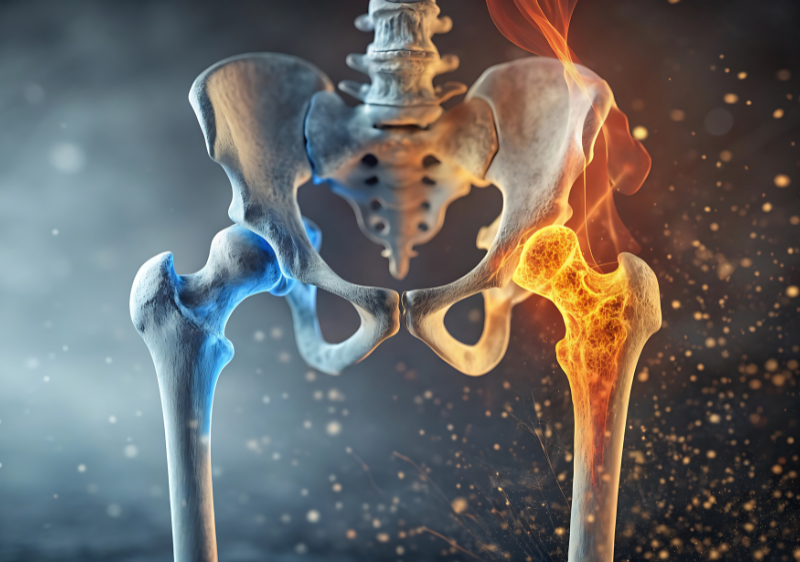
The Silent Thief: How X-Rays Play a Heroic Role in Detecting Osteoporosis Early
Osteoporosis is often called a “silent disease” because you typically can’t feel your bones getting weaker. For many, the first sign of trouble isn’t pain, but a sudden fracture from a minor trip or even a strong sneeze. However, modern medicine has a powerful tool in its arsenal to catch this “thief” before it strikes: X-ray technology.
While most people think of X-rays only for fixing broken bones, specialized X-ray techniques are the “gold standard” for early detection, helping millions of people protect their mobility and independence.
Why Early Detection is the Ultimate Game Changer
Osteoporosis occurs when the body loses too much bone, makes too little bone, or both. In its early stage, known as osteopenia, bone density is lower than normal but not yet at the “danger zone” of osteoporosis.
Detecting bone loss at this stage allows for:
- Lifestyle Adjustments: Increasing calcium and Vitamin D intake.
- Preventative Exercise: Starting weight-bearing activities to strengthen bone tissue.
- Medication: Utilizing treatments that can slow or even stop bone loss.
DEXA Scans: The “Gold Standard” X-ray
When doctors talk about X-rays for osteoporosis, they are usually referring to a DEXA (Dual-Energy X-ray Absorptiometry) scan. This isn’t your average chest X-ray; it is a highly specialized, low-dose radiation scan designed to measure Bone Mineral Density (BMD).
How a DEXA Scan Works:
A DEXA scan uses two different X-ray beams—one high-energy and one low-energy. By measuring how much of each beam passes through the bone, a computer can calculate exactly how dense the bone is.
- Precision: It can detect even a 1% change in bone density.
- Speed: The procedure is painless and takes only 10 to 20 minutes.
- Target Areas: It typically focuses on the hip and lower spine, which are the most common sites for osteoporotic fractures.
Standard X-rays vs. DEXA: Knowing the Difference
It is a common misconception that a regular X-ray can diagnose osteoporosis early. In reality, a standard X-ray usually cannot detect bone loss until 30% to 40% of the bone mass is already gone.
Understanding Your Results: The T-Score
The most important part of your X-ray report is the T-score. This number tells you how your bone density compares to a healthy 30-year-old.
- -1.0 or higher: Normal bone density.
- -1.0 to -2.5: Osteopenia (early signs of bone loss).
- -2.5 or lower: Osteoporosis.
Who Should Schedule an X-ray Screening?
Medical experts generally recommend a bone density X-ray for:
- Women aged 65 and older and men aged 70 and older.
- Post-menopausal women with risk factors (smoking, family history).
- Anyone who has broken a bone after age 50.
- Individuals taking medications like corticosteroids that can thin the bones.
Conclusion
You don’t have to wait for a fracture to know the state of your bone health. X-ray technology, specifically the DEXA scan, offers a clear window into your skeletal strength. By catching bone loss in its earliest stages, you can take proactive steps to keep your frame strong for years to come.
No comment